A heady mix of futures in fine details and broad strokes
Reviewing 'In Other Worlds' by Liam Young
The Ones Who Walk Away From Omelas is a short story by Ursula K Le Guin. If you’re not familiar, the basic idea is that Omelas is a city which is functionally a utopia for everyone except one person. There is a child being held in captivity and misery living a torturous existence, and everyone in Omelas knows about this, and nobody can stop it. Some people choose to leave the utopia and walk away into the mountains to a great uncertain and unknown fate because they cannot live with the knowledge that their comfort, safety and happiness are borne out of this horror.
There are many ways to draw lessons from The Ones Who Walk Away From Omelas. It has been mused on at length in the study and discussion of utopias for its ability to make a world of total abundance and pleasure seem possible so long as there is a catch. It serves as a poignant metaphor to some for modern capitalist imperialism, with the Omelas child representing the oppressed people of the imperial periphery, most especially the victims of genocide in Gaza. It can be interpreted as a question about the individual or societal acceptance of injustice, or a challenge to the sort of separatism of some who remove their personal complicity from unjust systems. After all it is the ones who walk away from Omelas, not those who stay nor the one who is trapped, that the author asks us to ponder. On different days I come back to the core idea of the story to see different things in it.
Today, the thing that interests me about The Ones Who Walk Away From Omelas is its vagueness and its - for want of a better word - flatness. The city is described in very loose terms as the narrator asks the reader to fill in their own details. This place exists in a narrative that is more of a thought experiment than a story, closer to Kafka’s short fables than Le Guin’s usual work. Future-focused mixed media artist Liam Young has chosen to give us futures - both dystopian and utopian - in similar vignette-worlds. Much like Omelas, none of them are supposed to be a fully locked-in prediction or statement of what the world of tomorrow will necessarily be, but each in turn makes points about our collective future.
This piece is going to be reviewing In Other Worlds, an art installation at The Curve in the Barbican Centre that I went to see on my 30th birthday. I thought this would be a nice birthday outing because a lot of my creative passions and resultantly a lot of my work concerns the future. The essay I am proudest of so far is my climate piece The World Is Not Ending, and I continue to be compelled by the climate crisis and other world shaping processes that we are living through. I have also spent a lot of time approaching politics from an epistemological lens - how do we know what we know? At the intersection of these areas of interest sits the peculiar question how do we know what the future will be? This is a perverse and hateful question, as the future is by its nature unknowable, and yet we all hold a sense of what is to come, and the combined senses of every person alive as to what the future holds shapes that same future.
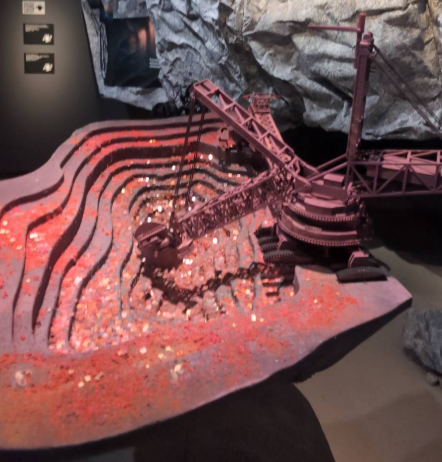
That is exactly the starting point of In Other Worlds, which first welcomes visitors into a cave - good enough for Plato, good enough for Liam. In the cave a narrator tells us a little about the processes of mineral resource extraction and their impacts on the environment that have brought us to the ecological catastrophe we face today. The voice tells us that the future is not, as many people think, “a noun” that is “waiting for us” somewhere. The future is a verb, says the voice, and we are doing it all the time.
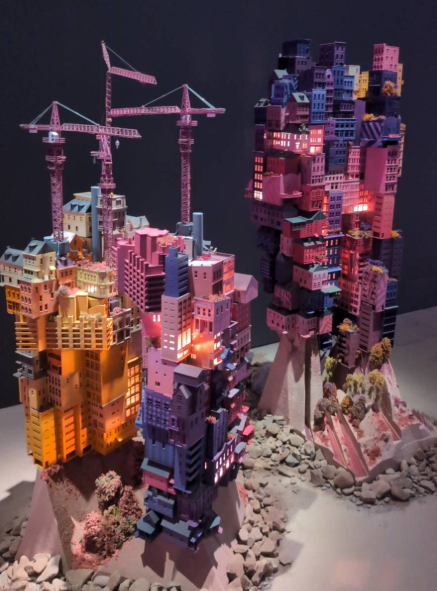
Exiting the cave we progress through a selection of “worlds”, each depicting a possible future for humanity in a world shaped by climate collapse and runaway capitalist greed. The first paints a picture of the horrible reality that technologists are trying to build. The others play in the space of different solutions to, or at least realities after, climate change.
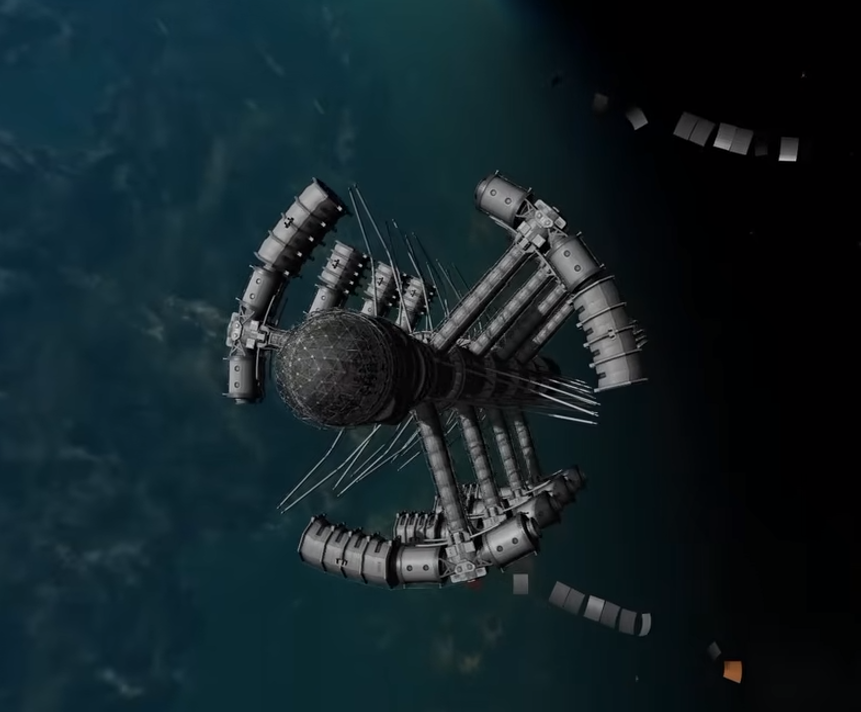
The first “world” we come to is The Machine World. In it, every scrap of natural resource and every tiny iota of landmass on planet Earth has been given over to industry. Specifically, the entire planet has become one enormous computer more or less. Everything is dedicated to building, maintaining, designing, improving and running the World Machine.
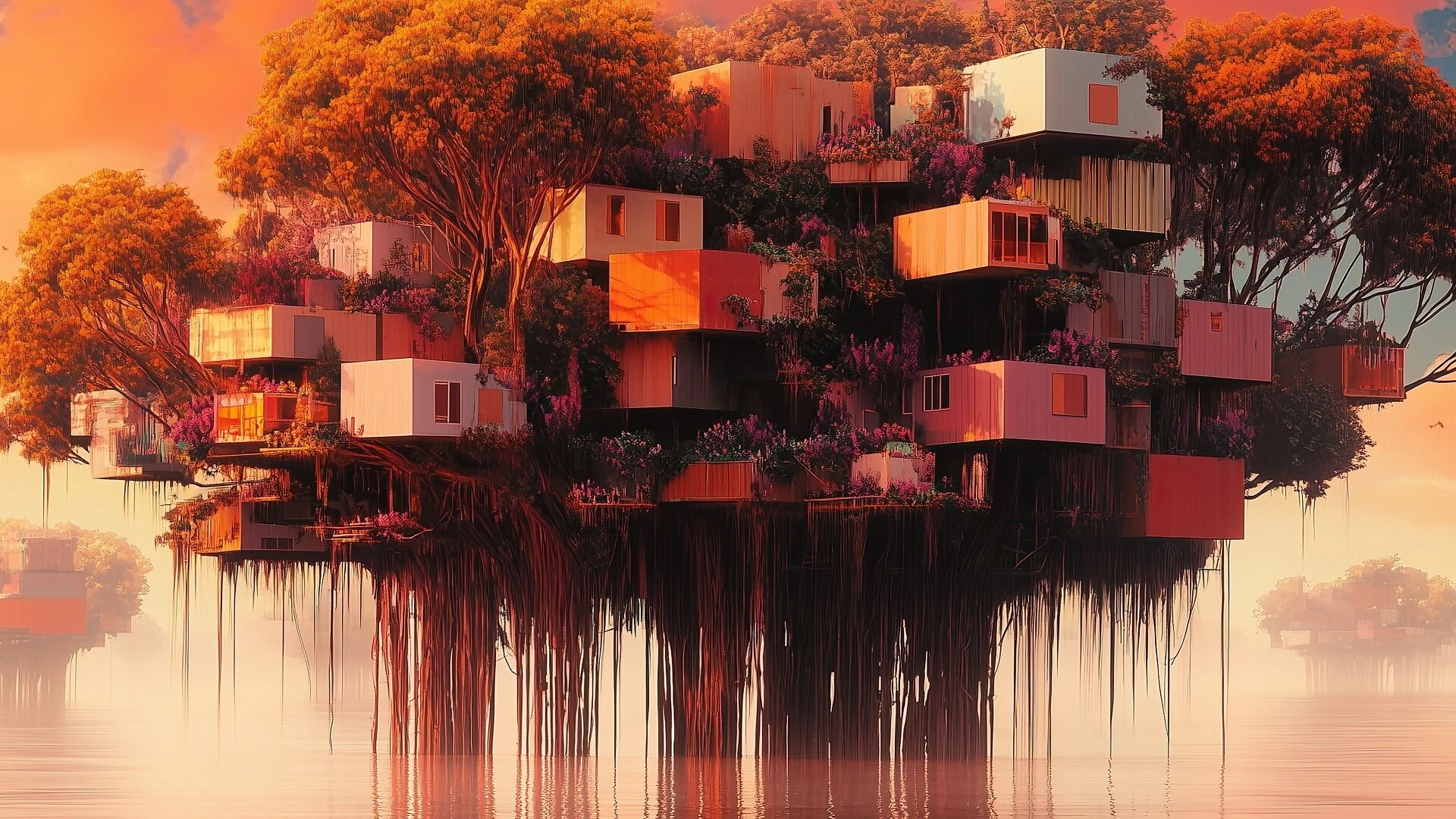
The second “world” the exhibit asks us to imagine is called After The End. The stories that we hear tell us about a project to rebuild the great barrier reef and to launch a satellite containing stories from Aboriginal oral traditions. This is, on the level of understanding and interpreting the future, a strong premise. It challenges “noble savage” ideas by presenting a vision of land sovereignty that embraces technology and change while also honouring tradition and the stigmatised cultural histories of indigenous people. Costumed mannequins hung from the ceiling create an otherworldly feeling to the space as though we were divers or astronauts while sitting to watch a short film.
Unfortunately, I need to talk about the use of AI for parts of the film. There is some relatively obvious irony to the experience, walking straight from the first world of the exhibit, “The World Machine” into the second one (ostensibly the opposite) showing a total reclamation of future autonomy and land sovereignty by Aboriginal Australian people brought to life visually by generative AI. The dystopia that kicks off the exhibit is a world consumed by the single-minded greed of tech billionaires, with every inch of the world transformed to allow for more compute. It even seems to deliberately evoke the mind-numbingly dumb cognitohazard “Roko’s Basilisk” in the way that the stubborn logic of profit and progress has consumed the planet. To not see this irony is at the very least concerning when it comes to understanding the perspective that the producers of the exhibit take when trying to imagine humanity’s future.
I relate to the struggle of trying to bring sometimes painfully abstract discussions of the world, of politics, and of the future to the screen. Last year I made a video essay about Kim Stanley Robinson’s Mars Trilogy for which I spent months recreating relevant imagery and set-pieces in Kerbal Space Program. The temptation for artists trying to bring conceptual or speculative visions to the screen is powerful, but it’s not like this was a student project with no budget. This exhibit was the product of dozens of creative collaborations (including, funnily enough, with Kim Stanley Robinson) and doubtless a huge number of working hours planning, crafting, writing, recording, curating and staging it.
In particular, the shots in the film that were clearly AI sitting next to shots that were, as far as I could tell at least, sculpted in 3D modelling software, just felt so bizarre. Like, if they have employed an animator, why not animate the whole thing? How does that animator feel about their work being intercut with AI? Maybe I have been fooled and every shot in the film was AI generated, but I would be quite surprised.
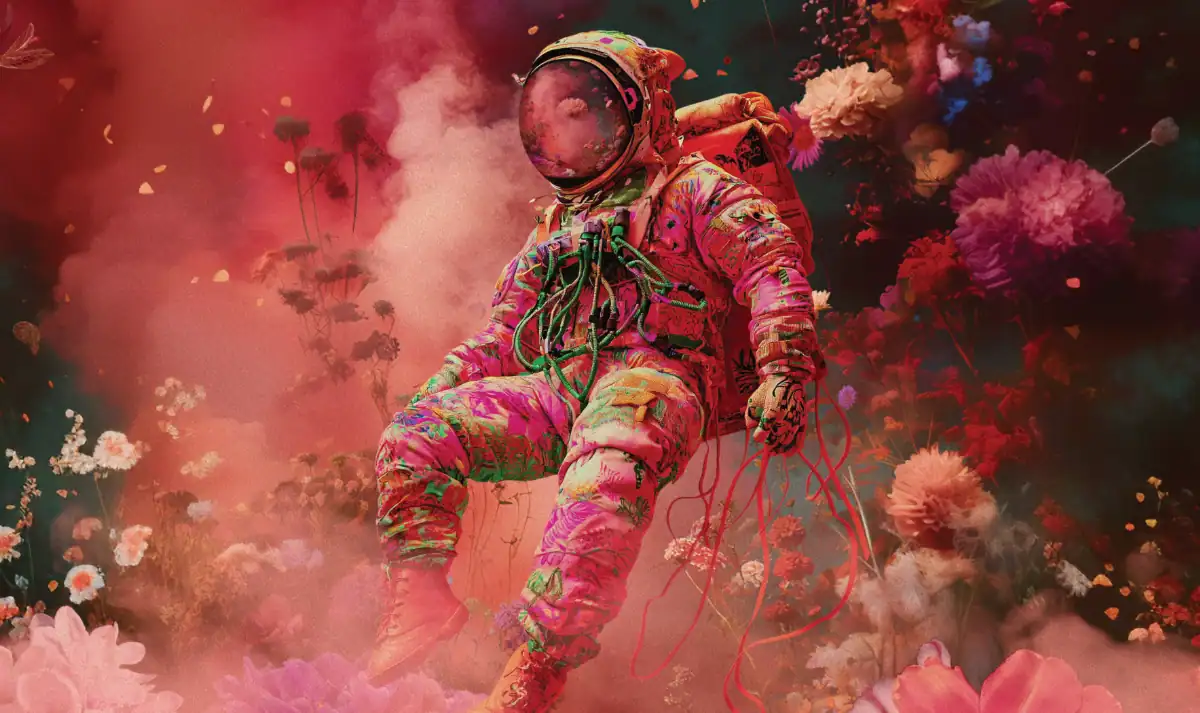
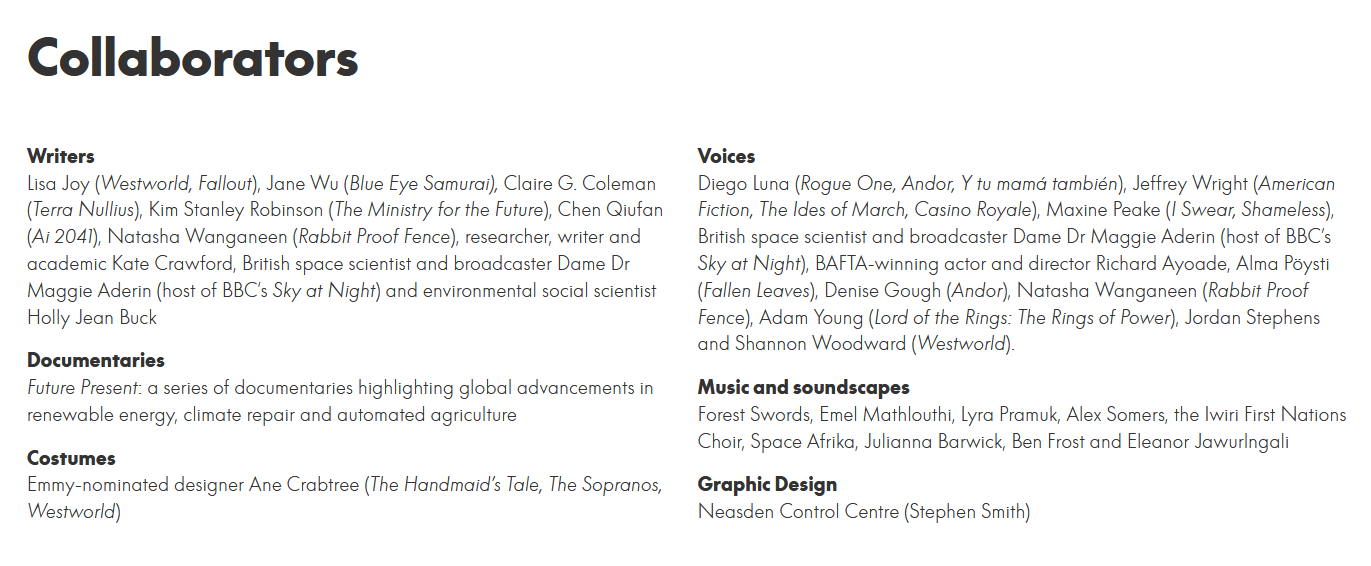
Kate Crawford, founder of the AI Now Institute, is listed as one of the people who helped to make the exhibit happen, and it feels as though the intention was to use generative AI for the exhibit in a way that would showcase how “future thinking” everyone involved was. Stylistically, some of the AI generated shots felt very fitting and like they were bringing something to the film, but others felt deeply disappointing and ultimately cheapening. The paint-splattered astronaut featured in the film and also the promotional materials for the exhibit is wearing hiking boots as though they were a part of a space suit. Once the use of AI in this is apparent, it can’t be unseen and it makes details like this feel like AI hallucinations that either nobody cared enough to catch or change, or weren’t in a position to challenge. In and of itself, the use of AI for parts of the film don’t tarnish the whole exhibit, but they demonstrate a flaw in the thinking of the people who made it which slowly unravels a lot of what is good about it.
The systems that shape the worlds Liam Young presents are quite like the systems that are acting upon our own, but they have a specific skew to them. Race & racism for example, is very present in much of the exhibit with a repeated focus on the legacy of settler colonialism in Australia, which is where Young is from. Two artists of Aboriginal heritage - Claire G Coleman and Natasha Wanganeen - contributed thoughtful elements to the exhibit exploring the relationship between indigenous people and land sovereignty. Elements of East Asian cultures were evident in the omnicultural Planet City, but little else in a way that made those parts feel like a shallow gesture at a sort of alienness, despite several collaborators being either from East Asian cultures or American migrant families with East Asian backgrounds. These together with the notable absence of any recognition of anti-blackness or Islamophobia, two of the strongest and most readily weaponised forms of racism in our politics today, made the approach to race feel like an odd echo of real world racial politics. It made the “worlds” presented feel safe, not in the sense that it would be safe to live in them, but in the sanitised sense.
That is just one example of the ways that ideologico-material social systems feel poorly understood in In Other Worlds. There are quite a few. It’s not like I wanted the World Machine area of the exhibit to break out into a Marxist lecture about the labour theory of value and the need for the proletariat to rise up against the bourgeoisie. I think that dystopia as an artistic trend communicates a lot better to an audience on an emotional level some things that would be lost in something too plainly preachy or too focused on hard economic facts like Marx’ analysis. The issue for me is that which ideas are given space, and what kind of space and how much, shapes the overall impression of what is possible and what is likely in the future.
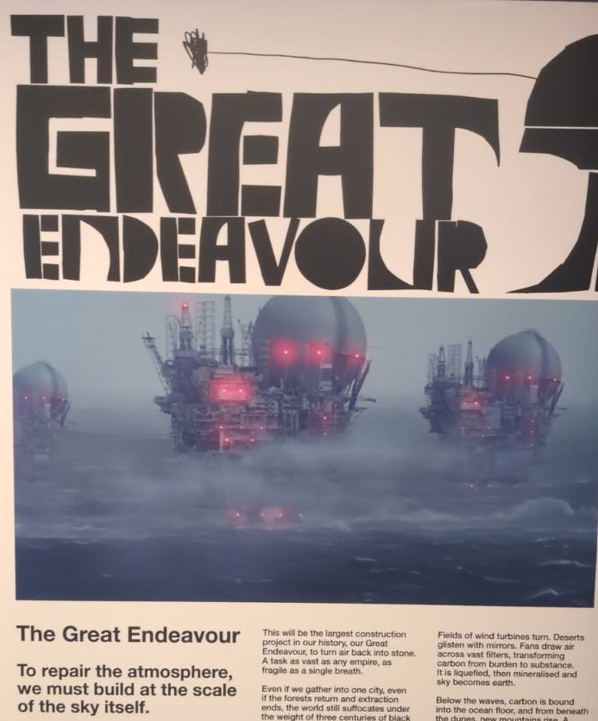
This bring me on to The Great Endeavour. The fourth “world” of the exhibit, this area focuses on technologies for decarbonisation. Those familiar with my work will know this issue is a particular pet peeve of mine and has been for years. The issues with Carbon Capture and Sequestration are manifold. To explore a few of the more pressing ones: current CCS technology is used in some cases to more efficiently frack fossil fuel deposits; decarbonisation technologies are already being presented as carbon indulgences through a “carbon credit” system; the scale of distribution of these decarbonisation technologies would need to be unthinkably massive and consequently the political will driving it would have to be stronger and larger than any political project that has ever existed. These are some of the things that make this section of the exhibit the most fraught.
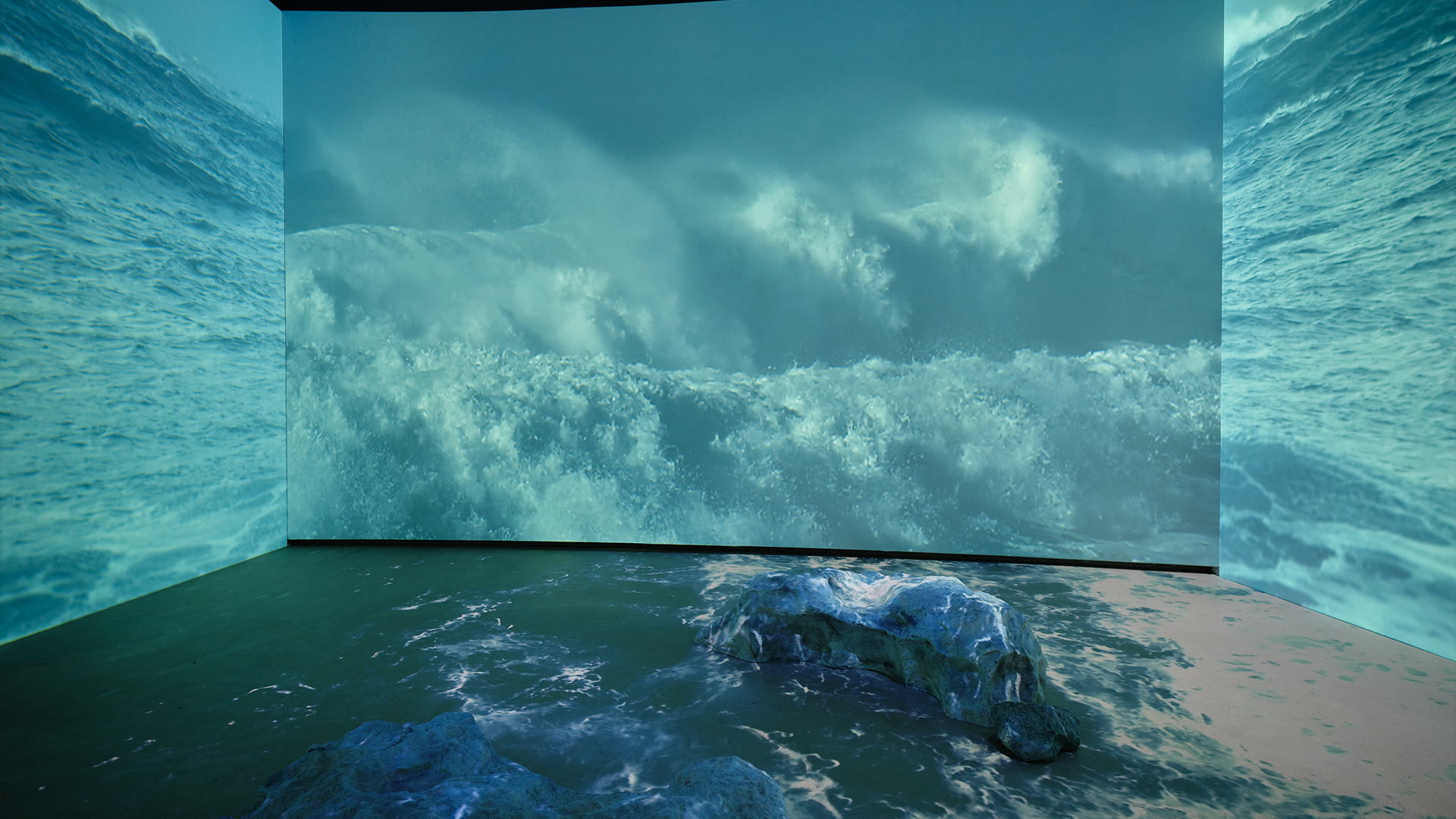
At the same time as these technologies are presented as something that could feasibly work, the absurd scale is the main focus of this “world”. A Projection screen room gives visitors the sense of being dwarfed by machines that make even the ocean itself lose some of its magnitude. The characters in the stories that visitors can listen to are divided by the almost cult-like drive to build the decarbonisers. Do the producers of the collection understand these issues? Are these attempts to represent CCS as an impossible pipe dream? It is unclear. What is undoubtedly the most artistically adventurous and striking part of the exhibit is, at least to me, the least clear.
To me, the biggest issue with these imagined decarbonising solutions is not the scale or the cost or the fact that we already have a perfectly good carbon-capture-and-storage method and it’s called TREES. To me the biggest issue is that the pollution currently choking the world is not a natural facet of feeding and housing and clothing nearly 10 billion people but rather the specific products of American imperial infrastructure and capitalist overproduction. The climate movement has known and been saying for decades that if we all worked less and if every country could have its economy focus on sustainability instead of infinite growth, we could stop climate change dead in its tracks. We even got a real life demonstration of this under the pandemic, when global lockdowns brought the economy to a standstill and humanity lived within its pollutant quota for the first time in decades.
The amount that everyone works today is not for their own benefit, it’s for the benefit of the ultra wealthy. If we wanted to have sustainable societies, we could achieve both ecological homeostasis and more free time on average for basically everyone if we were willing to deliberately address the ways that our societies are structured. This of course would require a revolution, because when I say that people work so hard in service of the ultra wealthy, I mean that excessive coercion is used to make that situation the norm. It has been well known now for a long time that “business as usual” is set to kill every living thing on the planet, and while In Other Worlds seems ready to imagine different ways for society to work, political revolution is always absent.
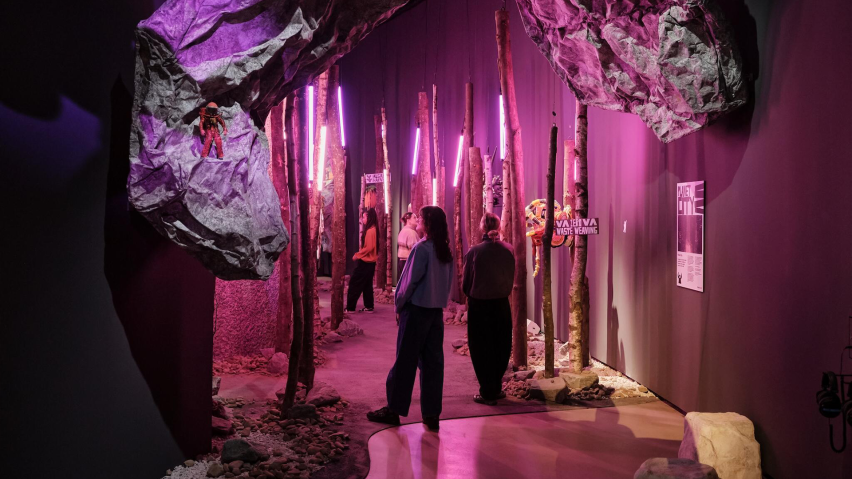
Andrzej Lukowski writing for Timeout London said “This is haunting speculative fiction, not the recommendations of an environmental think tank.” I find that line quite effective for summing up a lot at once about this exhibit. Perhaps I am too ready to approach the questions that In Other Worlds wants us to ask with a quite intense political lens. Perhaps I am in a sense too deep into these particular issues. However, the reality is that we face total annihilation unless the entire world undergoes a series of political revolutions that I and many others would argue have already begun. Some of these revolutions will progress in ballots, others in battles. Some of them will be fighting against historically unjust and brutalising systems, others will be fighting towards a future that we deserve.
Like so much other climate related art, Young’s exhibit tries to suck the politics out of an intrinsically, intensely, painfully political issue, and in doing that makes something a little odd and sometimes stale. Why then do I want to spend so much time talking about it and why have I given it this space? I deeply believe that we need to be articulating futures, elaborating in great detail about what we think the world could be, should be, might be if we don’t act, may become, must become in 100 years’ time. We have to do this and we have to be prepared to be wrong, and to be in conversation with others who are engaged in, as Young puts it, the “verb” of future. We have to have dialogue around what the future could be, and so I hope to have done two things with this review:
Firstly, I hope that I have laid out my problems with the exhibit to further an understanding of what the future is likely to be, so that the practice of imagining possible futures can be refined and improved. I hope that I have explained well enough where this collection went wrong so that we can imagine better futures more effectively.
Secondly, I hope that I have laid out the frameworks by which as I see it this collection understands the future. I hope to give due credit and even applause to Young and his collaborators for daring to bring visions of the future to life. I hope that I have emphasised that this is desperately needed, and that the need to do this latter thing drives the need for the former thing, the critique, and vice versa.
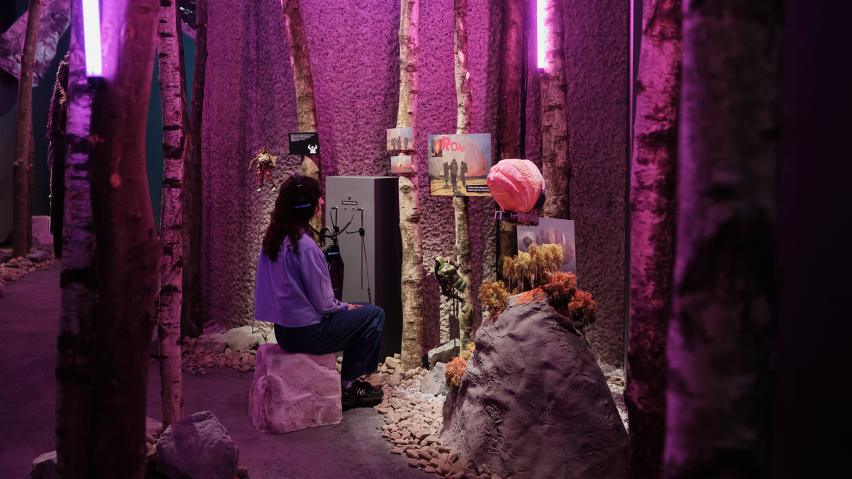
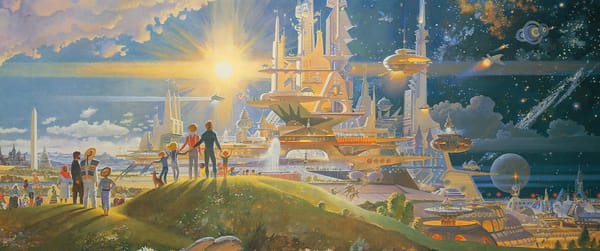
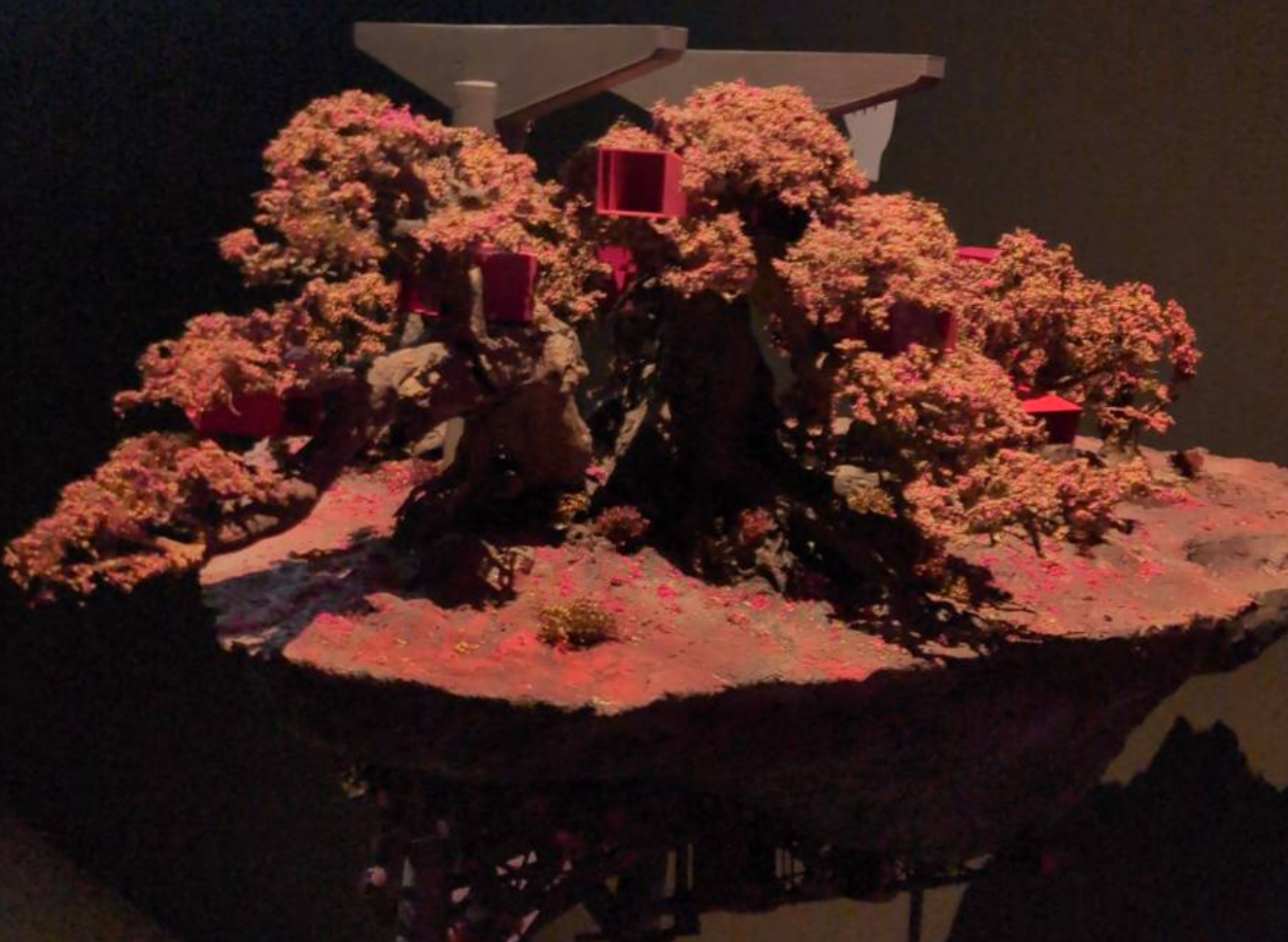
Of all the worlds presented in the exhibit, I find myself returning most often to the idea of Planet City, an urban mega project bigger than anything currently conceived to house all of the planet’s population. As with all of the ideas presented, and as I said at the start, this isn’t a serious prediction for our species’ future. We aren’t going to all go live in one massive city together except for a few stewards helping the rewilding projects, but is it possible that we will concentrate more in cities? This presented future is also very similar to the theory of climate future known as “half-earth socialism” and described in a book of the same name by Drew Pendergrass and Troy Vettesse. The idea behind this vision is that societies of tomorrow will vacate huge areas of the Earth’s surface - up to half of its land mass - to allow for rewilding like in the world of Planet City.
Again, the political will that only a revolution can bring is an odd component of this story. To make the decision to move into habitat-domes or climate-controlled urban areas, let alone one massive one, there would have to be a political project driving towards it. The real trends of people moving into or out of cities have far more to do with wealth and which industries are growing or shrinking.
I think about Planet City a lot and in particular one short story from that “world” in the exhibit written by Kim Stanley Robinson. The story describes characters playing a game that is very classically Kim Stanley Robinson and will be recogniseable to fans of his writing. The characters are transported in a windowless container to a part of the world and let out, and then need to use their understanding of physical geography, ecology and pioneering to figure out where on Earth they are and make their way to the highest nearby point to be picked up again. All of this is happening within the rewilding space in the rest of the planet that isn’t Planet City. It doesn’t really touch the rest of the exhibit that much but it’s a neat little story that deploys scientific trivia in a classic KSR kind of way.
Maybe I like it because it fits nicely with Half-Earth Socialism or another piece of climate art I’ve been writing about recently, Terra Nil. Maybe I just like it because it’s Kim Stanley Robinson or because it’s narrated by Richard Ayoade, another favourite of mine. I think it’s possible though that I find it the most engaging because of its distance from the central contradictions and struggles of the world in which it is set. I think that the dichotomy of the world of Planet City makes it more compelling. Whatever the city’s problems, just like Omelas there are ones who walk away.
This is something that makes things feel more real to us. We have an emotionally difficult time believing in things that are totalising, things we can’t walk away from or escape. But we can’t escape climate change. We will need to understand that although it is a force that effects everyone on the planet, it will not be possible to enact planetary solutions with one clear strategy unless we bring the levers of power into the hands of the people.
Despite my criticisms and my feeling that the curators are somewhat politically muddled, I would recommend this exhibit to others who see the need to loudly and deliberately envision the future. It is a great artistic project with a focus that I find special and important. It is not a photograph of the future. It isn’t even a portrait. It is a heady mix of futures in fine details and broad strokes. I hope that if more people join in with this practice, the visions will become clearer and the painter more lucid.